News

Harvestable Buffers with Yahara Pride Farms
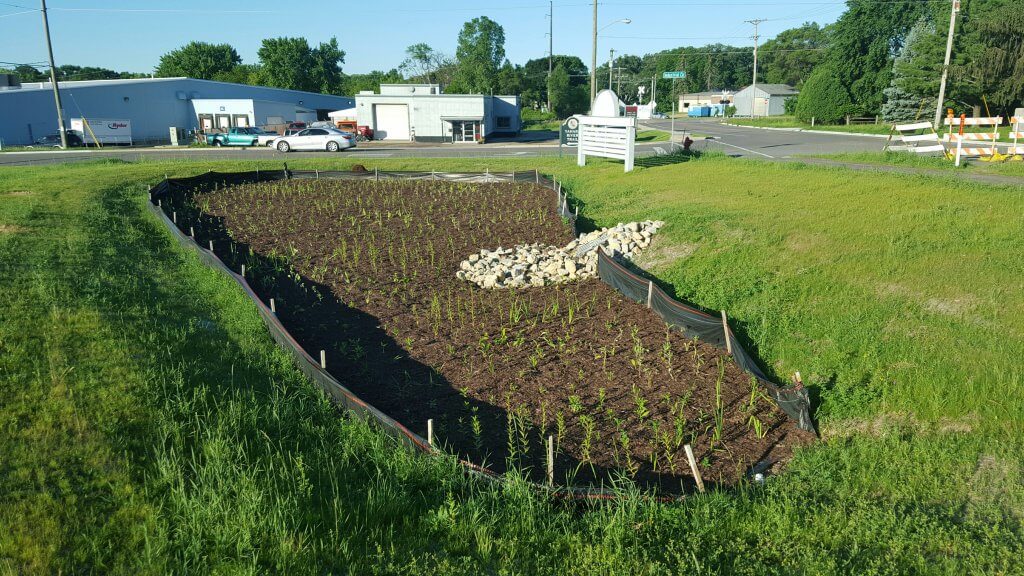
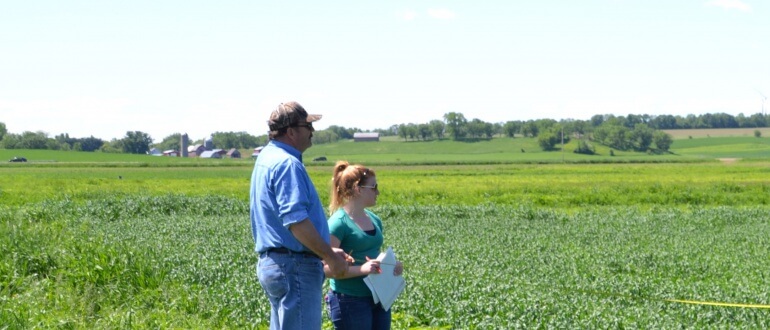
If you’ve seen swathes of grass on farmland, you may be familiar with the concept of conservation buffers. These strips of vegetation slow runoff and separate farm fields from waterways, helping to keep our streams and lakes healthy. Yet with increasing urbanization and growing farms, land in our watershed is at a premium. One option, harvestable buffers, is offering many farmers in Dane County a way to reduce phosphorus runoff while keeping valuable acres in production.

Read More

Composting grant looks to identify new tools for managing manure

MADISON, Wis. — Clean Lakes Alliance has been awarded a $60,000 two-year grant from Fund for Lake Michigan to determine whether windrow manure composting could have water quality impacts in the Yahara River watershed and beyond, including potential reductions in phosphorus runoff.

“Our lakes face serious challenges from urbanization and intensification of agriculture,” said Elizabeth Katt-Reinders, Clean Lakes Alliance Deputy Director. “With its potential to manage manure, benefit soil health and protect our lakes, composting could be a big win-win.”

Read More

When we talk about our lakes, we often end up talking about our farms. This should come as no surprise: if you walked onto a random acre of land in Dane County, chances are two times out of three you’d be looking at a farm.

According to U.S. Department of Agriculture, agriculture in Dane County accounts for $3.4 billion in economic activity annually. From our multi-generational dairy farms, to our land-grant university, to the Dane County’s farmer’s market, agriculture is part and parcel to our identity.

Read More

Lake Mendota has officially frozen over, after a long warm spell that left many wondering when (and if) the lake would ever freeze.

After a cold front drove temperatures below zero over the weekend and winds died down, Lyle Anderson, office manager at the Wisconsin State Climatology Office, knew the conditions were right for “instant ice.” Residents may have noticed a “steam fog” hanging over the lakes, created when cold air moves over warmer water, also a “harbinger of freeze.”

Read More

Project update via Peter Foy, President of the Friends of Lake Kegonsa Society

The Friends of Lake Kegonsa Society (FOLKS) has initiated what is hoped will result in a major carp removal project that will be conducted over the next two years on Lake Kegonsa. An initial carp tracking study is intended to identify times and locations where large concentrations of carp might be targeted for removal. FOLKS is working closely with Dane County, the Wisconsin Department of Natural Resources (WDNR) and the UW Limnology Department on this challenging project. The project will be supervised and monitored by Kurt Welke, Fisheries Manager, WDNR with support from Dr. Richard Lathrop, honorary fellow at UW-Madison Center for Limnology and retired DNR limnologist.

Read More

Fred Klancnik is no stranger to Wisconsin lakes. He served as President of JJR for 15 years, leading the firm’s waterfront planning, design and engineering practice from its Madison office. These days he works as a Professor of Practice with the University of Wisconsin Department of Civil and Environmental Engineering and is the President of Capstone Engineering Design, LLC providing advisory, planning and engineering design services to clients on land and waterfront development projects. He is also an active member of the Clean Lakes Alliance Community Board.

“I got involved with Clean Lakes Alliance because I believe it’s important to improve the quality of Madison lakes for residents as well as visitors to Madison,” Klancnik said. “When we improve the lakes we also improve the quality of life for Madison residents.”

Klancnik wants to work to improve public access to the lakes for both recreational and educational purposes and works towards this through his business, his work as a professor and his community involvement.

Klancnik enjoys the walking and bike paths that surround Madison’s lakes.

“I enjoy cruising around the shoreline and looking at the changes in the lakes,” Klancnik said. “I especially enjoy stopping at the piers by the Memorial Union and the Edgewater.”

Specifically he likes going from Picnic Point to the university shoreline, from Law Park to Brittingham Park and then likes to cross over the Isthmus to the Memorial Union.

Klancnik wants to improve the “loop” that the paths make downtown, in hopes to “improve public access to the lakes.”

He is working towards this goal by mentoring two teams of civil engineering and landscape architecture students. The students are working on plans to redevelop John Nolen Drive and Law Park along the Lake Monona shoreline in downtown Madison.

In addition to his work with the lakes, Klancnik also spends his free time enjoying the lakes. In fact, for the past 35 years he has been competing in the annual Paddle & Portage canoe race that takes place on Lake Mendota and Lake Monona. He has raced in every single Paddle & Portage (except for one) since it started. He races with his teammate Randy Cyrus, a former UW-Madison classmate. This is quite the tradition for the two friends who both turn 65 this year! Cyrus recently relocated to Wilmington, North Carolina but still came back to Paddle & Portage with his buddy this year.

“I can remember when the race first started and it was sponsored by Rutabaga Paddlesports,” said Klancnik. “The owner of Rutabaga used to dress up as Paul Revere on the day of the event and come in riding on a horse announcing ‘The canoes are coming, the canoes are coming!’ to the Saturday Dane County Farmer’s Market crowd.”

Klancnik believes that public waterfront properties and piers help to give more Madison residents and visitors access to the lakes. And in turn he believes this lake access will help improve the quality of life for those that live here and those that visit. He also believes there is still a huge opportunity to improve water quality in the lake system and wants to continue to improve water quality and Madison lakes with his work in engineering, as a professor, and as a member of the Clean Lakes Alliance Community Board.

****The commentary in this blog are my views and not necessarily the views of the Clean Lakes Alliance****

The second annual Lake Explorer Camp wouldn’t have been possible without generous funding from American Family Insurance, American Girl‘s Fund for Children and the Wingra Boats Duck Dash.

The program gets kids from the Boys & Girls Club of Dane County out on the water learning about lake science and recreation. Thanks to our funders, hours for the initial camp days were DOUBLED compared to last year and more kids were able to participate in the celebratory field day.

Read More

The University of Wisconsin-Madison’s Space Science and Engineering Center plays no small role in the implementation of the Lake Mendota research buoy and in the Lake Forecast partnership. The SSEC is instrumental in outfitting and maintaining the buoy as well as working with the data that it generates.

The Space Science and Engineering Center recently wrote a very informative, in-depth article about their work with the buoy, even back to the first buoy deployed in 1959. Our Watershed Engagement Intern, Justin Chenevert, is quoted in the article.

Read More