News

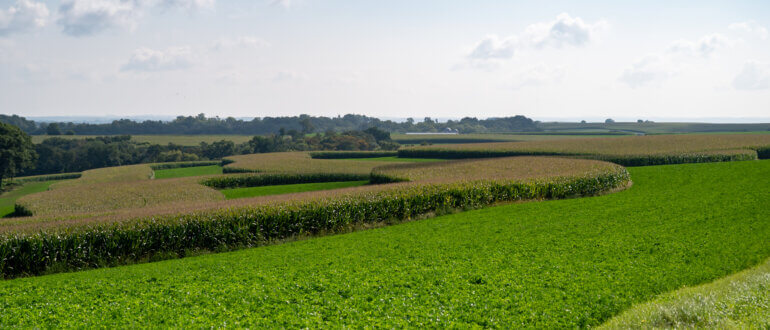
Contour planting shown at Kellercrest Registered Holsteins in Mt. Horeb, Wisconsin.

Healthy lakes start with healthy land. Much of the Yahara Watershed is agricultural, and the way soil and nutrients are managed on agricultural lands plays a critical role in protecting water quality. Rain and snowmelt can carry soil, manure, phosphorus, and other nutrients from fields into nearby streams and lakes. This can contribute to algae blooms and degraded water conditions in local lakes and waterways.

The good news? Farmers across our region are leading the way with proven conservation practices that keep soil in place, reduce runoff, and improve long-term farm resilience. From cover crops to nutrient management planning, these best management practices help protect both working lands and the waters we all depend on.
Read More

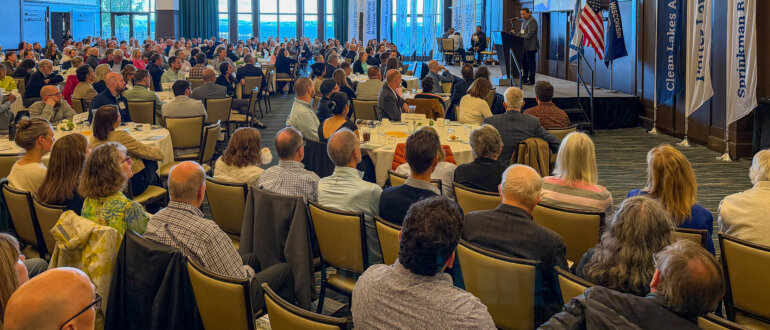
2026 State of the Lakes event at The Edgewater

Thank you for being part of State of the Lakes

We’re still celebrating the success of this year’s State of the Lakes, and we’re grateful to all who joined us.

With your support, we once again brought together scientists, community and business leaders, government officials, and representatives from the Ho-Chunk Nation to deepen our understanding of the challenges facing our lakes and build momentum for collaborative action. 

Read More

Clean Lakes Alliance's Watershed Programs Manager Caitlin McAleavey volunteers with Dane County Parks to process native seeds for distribution across the Yahara Watershed

Many hands make light work. And for volunteers collecting and processing native seeds, it can be fun work, too!

On any given fall day, you can likely find volunteers collecting native seeds from a local prairie. For years, many organizations, including Clean Lakes Alliance, have offered this volunteer opportunity and encouraged people to join us in the prairie.

Read More

Dane County Executive Melissa Agard speaks at the 2025 event

Thank you for helping make the Community Coffee a success!

We extend our heartfelt gratitude for your support in ensuring that this year’s Clean Lakes Community Coffee was a resounding success! This cherished event, held every other year, serves as a platform to foster unity within our community, provide educational opportunities, and enhance awareness about the significance of our lakes. Your participation has truly made a difference in highlighting the importance of preserving and protecting this vital natural resource for current and future generations.

Read More

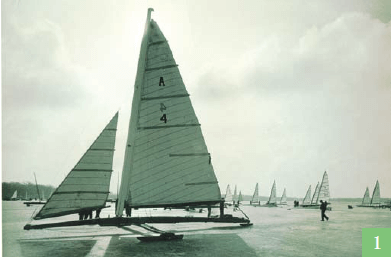
Mary B on Lake Mendota (1955). Photo courtesy of Jay Payton.

Restoration Efforts Underway for Historic Madison Ice Yacht

On a cold, bright day in February 2016, an iconic piece of Madison’s history came home in memorable style. As the wind freshened, the towering sails of the Mary B iceboat filled and the 39-foot craft took flight—skimming across the ice with the same grace and agility that drew crowds of cheering onlookers to Madison’s lakes more than 60 years ago. That short-but-triumphant cruise was the first of what an enthusiastic group of fans hope will be many such adventures for the venerable Mary B.

Read More

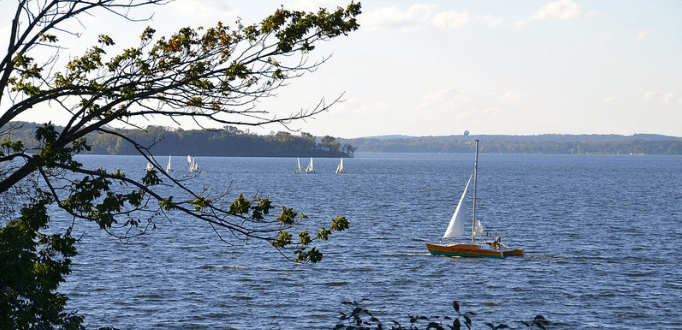
Lake Mendota, Don Sanford

Until last fall, most folks knew Don Sanford as one of the pack of “water rats” who raced their sleek, wind-powered craft on the waves and ice of Madison’s lakes. But with the publication of a book 12 years in the making, Sanford took on an unlikely new role: keeper of the history and lore of Lake Mendota.

“I’ve always been a sailor, never a writer,” says Sanford, an agile-looking man with a grizzled beard and sea-grey eyes behind wire rim glasses. “When I started the project, the last thing I had written was in grad school back in 1974.” Yet he dove in, driven by knowledge that Lake Mendota was too often a mystery to the people who lived along its shores. “I’d pick up friends from the Memorial Union for a boat ride, and we would start cruising down the shoreline. Without fail, somebody who’d spent their whole life in Madison would say, ‘Where the hell are we? I don’t know what this place is.’ Whenever that happened,” Sanford recalls, “it always made me think that somebody— somebody else, that is—should produce a lake guide.”

Read More