News

2026-9 Lot 3 Sunnyside Email Header 3

American cultural anthropologist Margaret Mead famously said, “Never doubt that a small group of thoughtful, committed citizens can change the world. Indeed, it is the only thing that ever has.” 

Thursday, September 24, 2026, is a case in point. A remarkable, grassroots endeavor just culminated in a conservation legacy-making milestone. Clean Lakes Alliance has officially closed on the purchase of Lot 3 Sunnyside near Lake Kegonsa.
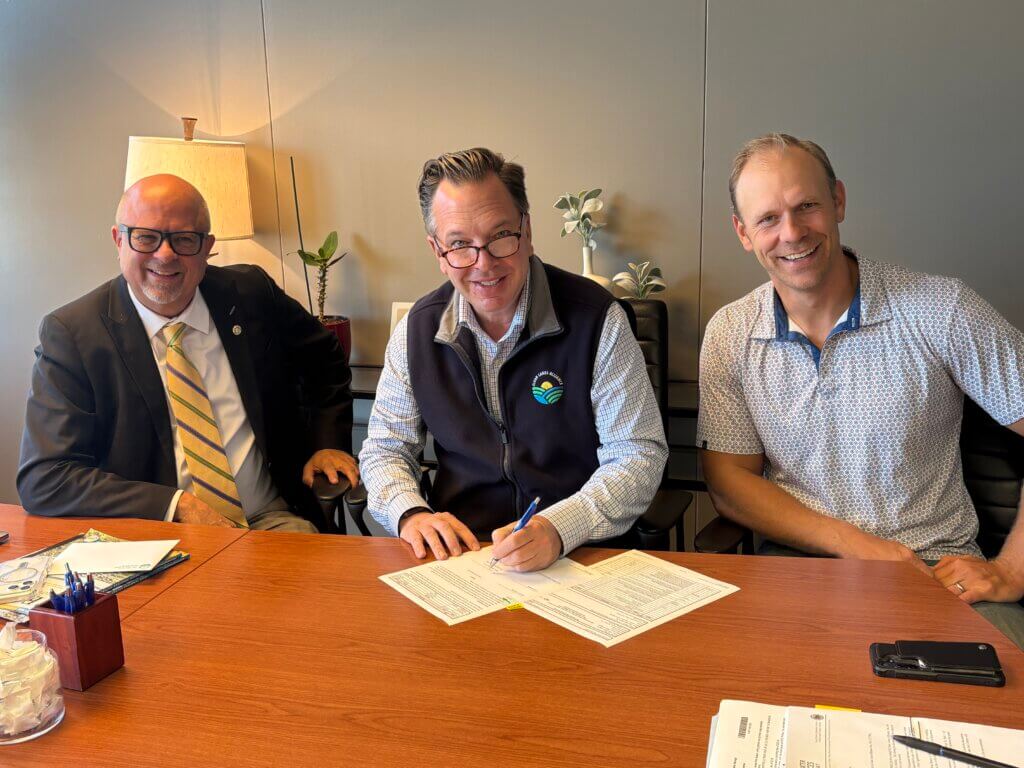
Lot 3 Sunnyside property closing
Scott Haumersen representing the Preserve Lot 3 Sunnyside committee, Clean Lakes Alliance Executive Director James Tye, and Paul Haviland of Stark Company Realtors representing the seller of the property at the closing on September 24, 2026

Protecting land near Lake Kegonsa

The 7.85-acre property is in the Town of Pleasant Springs. It borders Lake Kegonsa State Park, Dane County’s Door Creek Wildlife Area, and the Lower Yahara River Trail. As part of the closing, the property title was transferred to the Wisconsin Department of Natural Resources, adding to Lake Kegonsa State Park. This permanently protects this piece of land for wildlife habitat, water quality improvement, and public enjoyment.
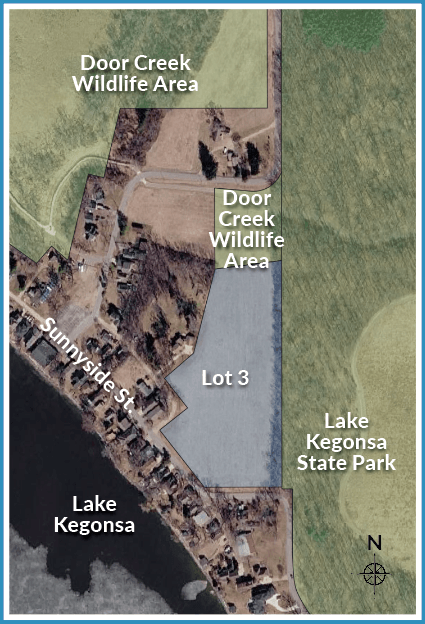
2026 Lot 3 Sunnyside Property
Map of Lot 3 Sunnyside property adjacent to Lake Kegonsa

Neighbors and donors make conservation possible

What began with area neighbors determined to protect one of the last undeveloped parcels near Lake Kegonsa grew into an extraordinary partnership. Donors responded to a call to action with generosity, joining other partners to make the $920,000 property purchase possible. The outpouring included critical support from Dane County through a Conservation Fund matching grant. Every contribution highlighted the shared belief that protecting special places is an investment in cleaner water, healthier landscapes, and a lasting conservation legacy.

A community united

Special recognition goes to the Preserve Lot 3 Sunnyside Committee whose neighbors and volunteers supplied the vision and countless hours needed to carry this effort from idea to acquisition. The committee organized the fundraising campaign and rallied the community. This committee also pursued grants and built the partnerships necessary to protect the property in perpetuity. From the beginning, its goals included conserving natural resources, protecting wildlife habitat and water quality, preserving open space, and restoring the site to native prairie. Their work is a powerful example of what can happen when people see an opportunity to protect a place they love and refuse to let it pass by.

The following statement was released by the Committee leading up to the closing: “It’s amazing that a small group of people with support from Dane County and over 225 other donors could make the conservation of Lot 3 Sunnyside possible. Gifting the land to Lake Kegonsa State Park is a legacy that will endure for generations to come.”
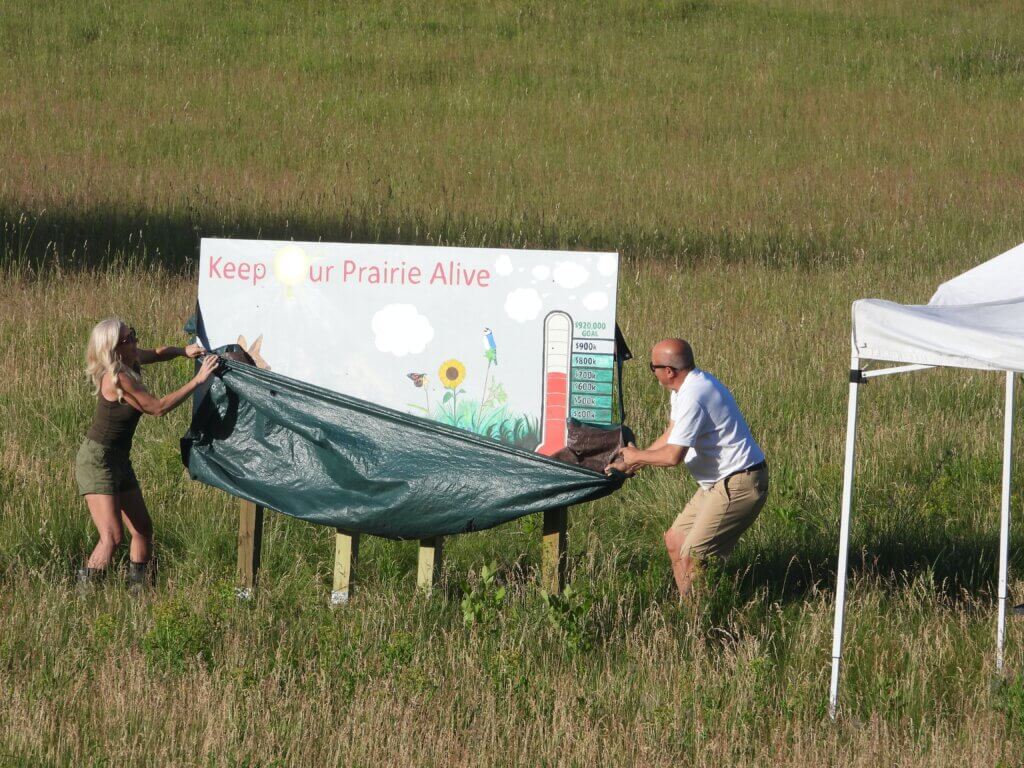
Lot 3 Sunnyside support sign
Image above showing the unveiling a sign created by the McFarland High School Art Department. The sign shows support in dollars given to protecting Lot 3 Sunnyside.

Preserving land for future generations

Clean Lakes Alliance is proud to have served as the project’s fiscal agent and partner. The nonprofit provided the nonprofit infrastructure needed to receive tax-deductible contributions, pursue public funding, and complete the acquisition. According to Executive Director James Tye, “Protecting land like this is closely aligned with RENEW THE BLUE: A Community Guide for Cleaner Lakes and Beaches in the Yahara Watershed, helping to fulfill a high-impact action recommended to improve our local lakes.”  

Celebrate the success

Project partners, donors, neighbors, volunteers, and community members are invited to an on-site celebration. Mark your calendar for Saturday, October 17, beginning at 1:00 p.m. at Lot 3 Sunnyside (see map above).

Support future projects like Lot 3 Sunnyside

The success of Lot 3 Sunnyside shows what’s possible when neighbors, donors, volunteers, and conservation partners come together around a shared vision. Your support helps Clean Lakes Alliance be ready to step forward when the next opportunity arises. Together, we can protect land, improve water quality, and create a lasting conservation legacy for our lakes and communities. Please consider making a gift today to our Conserve an Acre or Seed the Need funds. Help make future projects like this one possible.
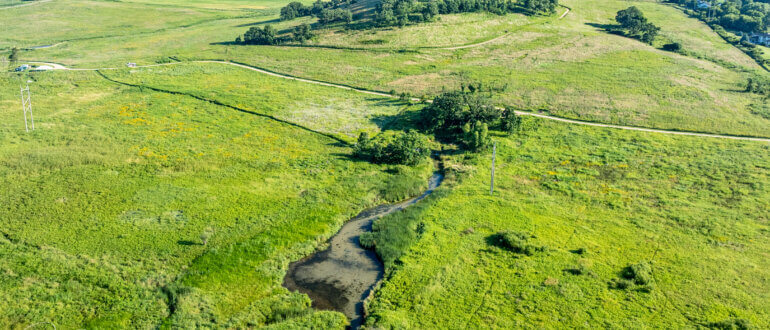
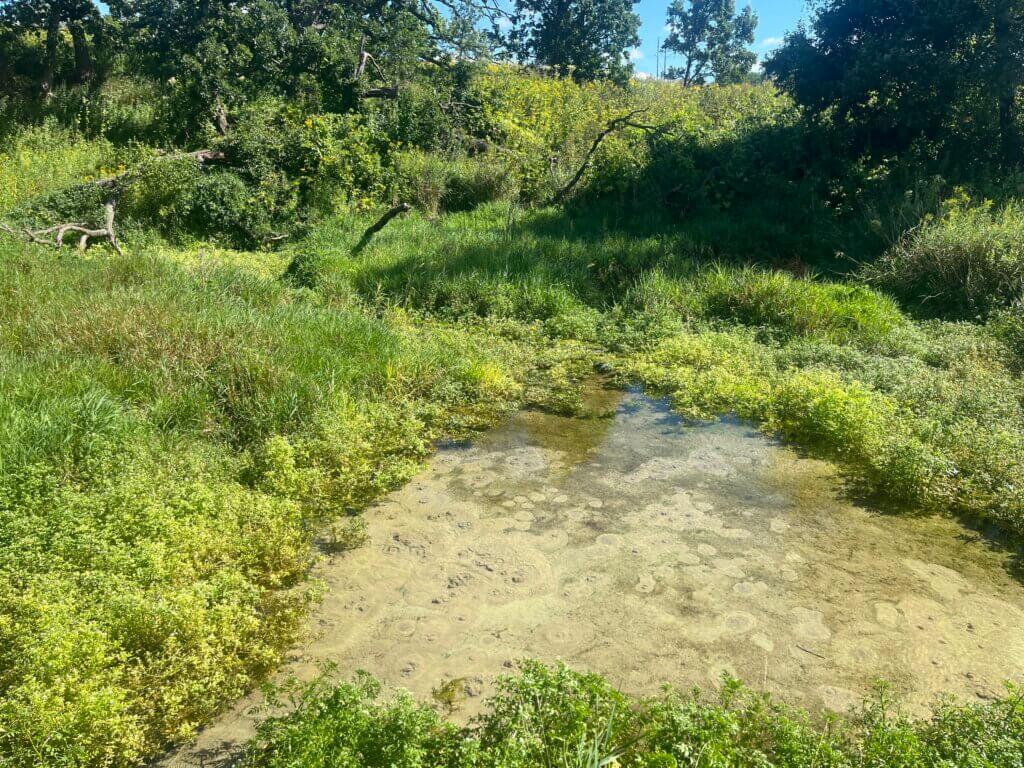
View of Frederick's Hill in the background at Pheasant Branch Conservancy, with Frederick's Spring near the grouping of trees in the center of the photo. Pheasant Branch Creek extends toward the bottom of the photo from the spring. Photo courtesy Robert Bertera.

BY SUSAN SWANSON, DIRECTOR, STATE GEOLOGIST
WISCONSIN GEOLOGICAL AND NATURAL HISTORY SURVEY & UW-MADISON DIVISION OF EXTENSION

View of Frederick's Spring at Pheasant Branch Conservancy
Frederick’s Spring at Pheasant Branch Conservancy

The Greater Madison Area is well known for its lakes, but the region is also rich with springs, where shallow groundwater naturally flows to the surface. The Yahara lakes and the broad wetlands that surround them, such as Cherokee Marsh or the Waubesa Wetlands, are also partly fed by groundwater. But in a spring, the groundwater emerges in a concentrated, visible form, often lifting and suspending sand from the bottom of a pool, flowing from a fracture in a rock outcrop, or even creating a stream depending on the volume of water.

Read More

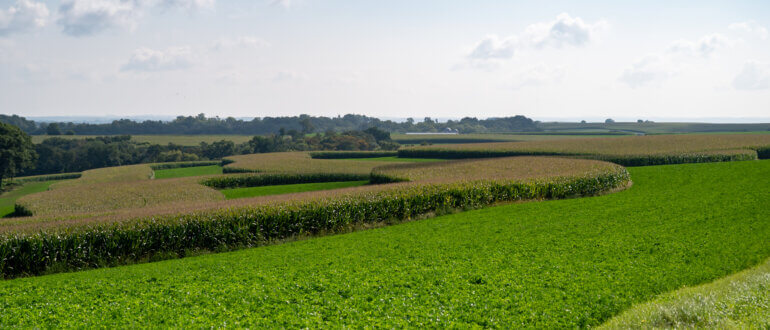
Contour planting shown at Kellercrest Registered Holsteins in Mt. Horeb, Wisconsin.

Healthy lakes start with healthy land. Much of the Yahara Watershed is agricultural, and the way soil and nutrients are managed on agricultural lands plays a critical role in protecting water quality. Rain and snowmelt can carry soil, manure, phosphorus, and other nutrients from fields into nearby streams and lakes. This can contribute to algae blooms and degraded water conditions in local lakes and waterways.

The good news? Farmers across our region are leading the way with proven conservation practices that keep soil in place, reduce runoff, and improve long-term farm resilience. From cover crops to nutrient management planning, these best management practices help protect both working lands and the waters we all depend on.

Read More

2026 LTL near Olin Park and Lake Monona

A great day for our lakes

What an incredible Loop the Lake! Thank you to everyone who participated, volunteered, donated, sponsored, or supported the event in any way. Community commitment to our lakes helps make this effort possible.

With community-wide support, we can continue investing in lake restoration projects, educational programs, and water quality monitoring efforts throughout the Yahara Watershed.

This year, 1,280 participants from across Greater Madison and beyond joined the Loop the Lake bike ride. Their participation demonstrated a shared commitment to protecting and improving the health of local lakes. We also extend our sincere gratitude to our sponsors and volunteers, whose generosity and dedication made this event possible.

Read More

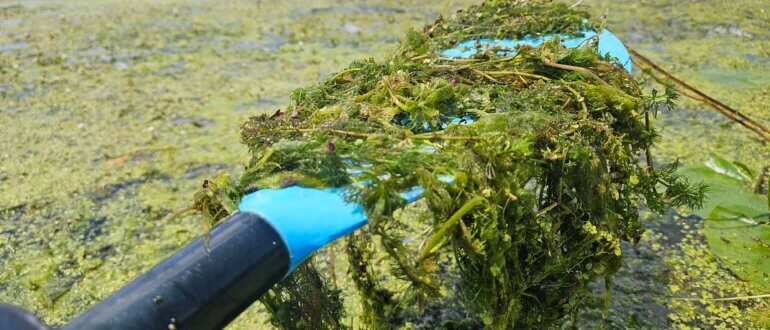
Lake Wingra aquatic plants

Submerged aquatic plants, often dismissed as “weeds,” are essential to the freshwater ecosystems of lakes and rivers. Known scientifically as macrophytes, aquatic plants absorb nutrients like phosphorus and nitrogen which otherwise can fuel algal blooms. They also stabilize lake-bottom sediments, help protect shorelines from wave erosion, and provide critical habitat and food for fish and other wildlife. Because aquatic plants play such a vital role, the Wisconsin Department of Natural Resources (DNR) regulates and limits their removal to preserve the numerous benefits they bring to our waterways.

Read More

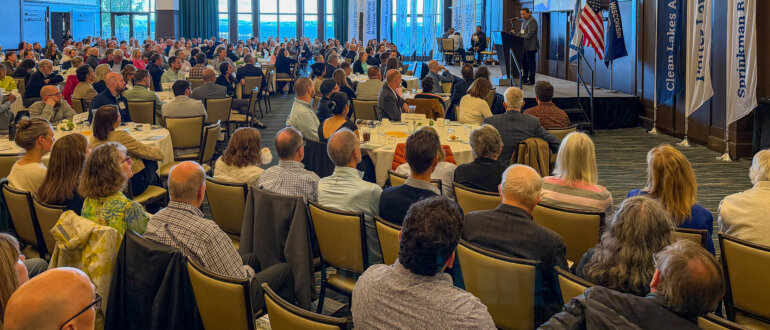
2026 State of the Lakes event at The Edgewater

Thank you for being part of State of the Lakes

We’re still celebrating the success of this year’s State of the Lakes, and we’re grateful to all who joined us.

With your support, we once again brought together scientists, community and business leaders, government officials, and representatives from the Ho-Chunk Nation to deepen our understanding of the challenges facing our lakes and build momentum for collaborative action. 

Read More

2026 Frozen Assets Festival

Thank you for helping make Frozen Assets unforgettable!

Thank you for helping Clean Lakes Alliance turn frozen lakes into a full-on celebration! Our annual Frozen Assets Festival and 5K Run/Walk brought people together and put winter lake appreciation front and center.

Read More

2025 nearshore training

LakeForecast water quality monitoring in 2025

Clean Lakes Alliance’s LakeForecast water quality monitoring program completed its 13th season in 2025. This program is entirely volunteer implemented, with more than 100 trained monitors assessing water quality conditions from nearshore and offshore locations across all five Yahara lakes (Mendota, Monona, Wingra, Waubesa, and Kegonsa).

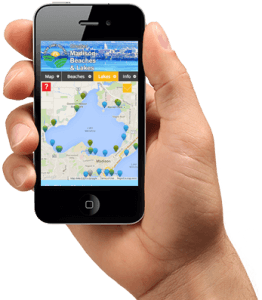
From Memorial Day through Labor Day, volunteers recorded water clarity, air and water temperature, waterfowl presence, the extent of floating plant debris, and the severity of green algae and cyanobacteria at public beaches, lakeside parks, and private piers. Submitted condition reports were able to be tracked in real-time on Lakeforecast.org or our free app, allowing the general public to stay up to date on current lake conditions.

Read More