
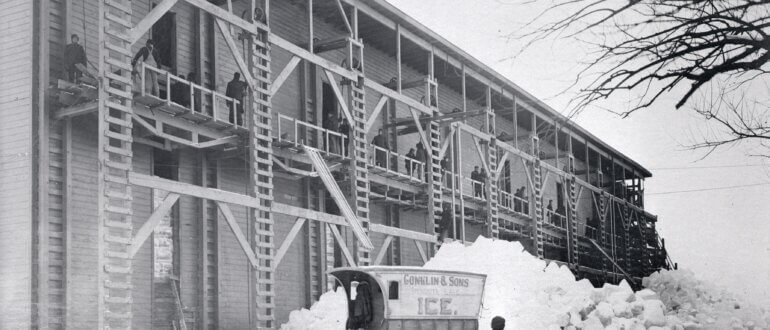
Did you know our lakes supplied a much-sought-after product representing one of the area’s top exports? Greater Madison’s lakes once played a crucial role in the ice harvesting and refrigeration industry, a significant part of the local economy in the late 19th and early 20th centuries.
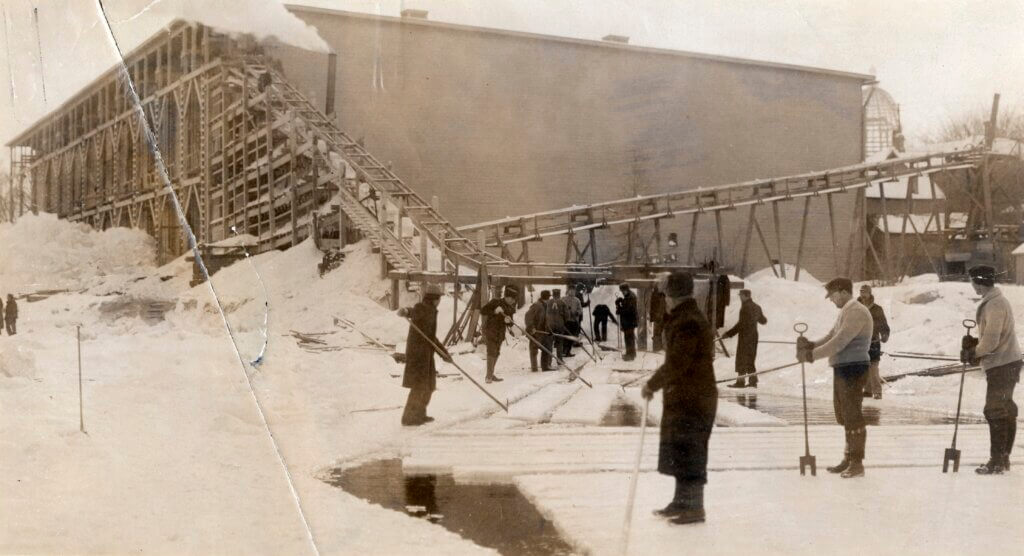
Photo courtesy Wisconsin Historical Society, WHI 11341.
Ice harvesting began locally in the 1850s and quickly expanded alongside the region’s growing brewing and meat-packing industries. The arrival of the Illinois Central Railroad in 1887 further expanded new markets for this budding industry with Lakes Wingra, Monona, and Mendota becoming prominent suppliers. According to Wisconsin Magazine of History, the ice was nearly always at least 12-14 inches thick.
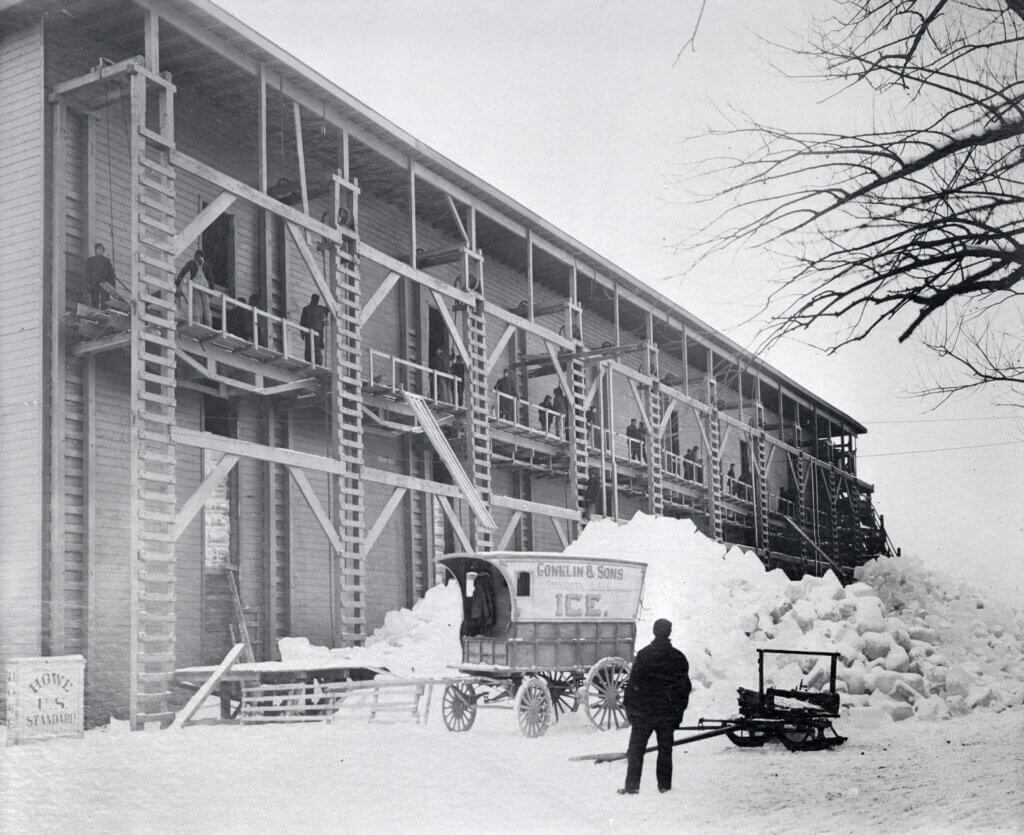
Photo courtesy Wisconsin Historical Society, WHI 117662.
Harvesting ice from our local lakes
Ice harvesting typically took place in January, although in colder years it continued into March, when ice could still reach 18 inches thick. Workers harvested the ice using a combination of manual labor and horse power. Horse-drawn plows cleared the snow, and workers scored grooves into the ice by hand to map out 22-inch squares for cutting. These grooves were then deepened by horse-drawn ice cutters which sliced the ice approximately two-thirds of the way through. The blocks were then removed by hand and floated to an elevator that lifted the ice into a storage building.
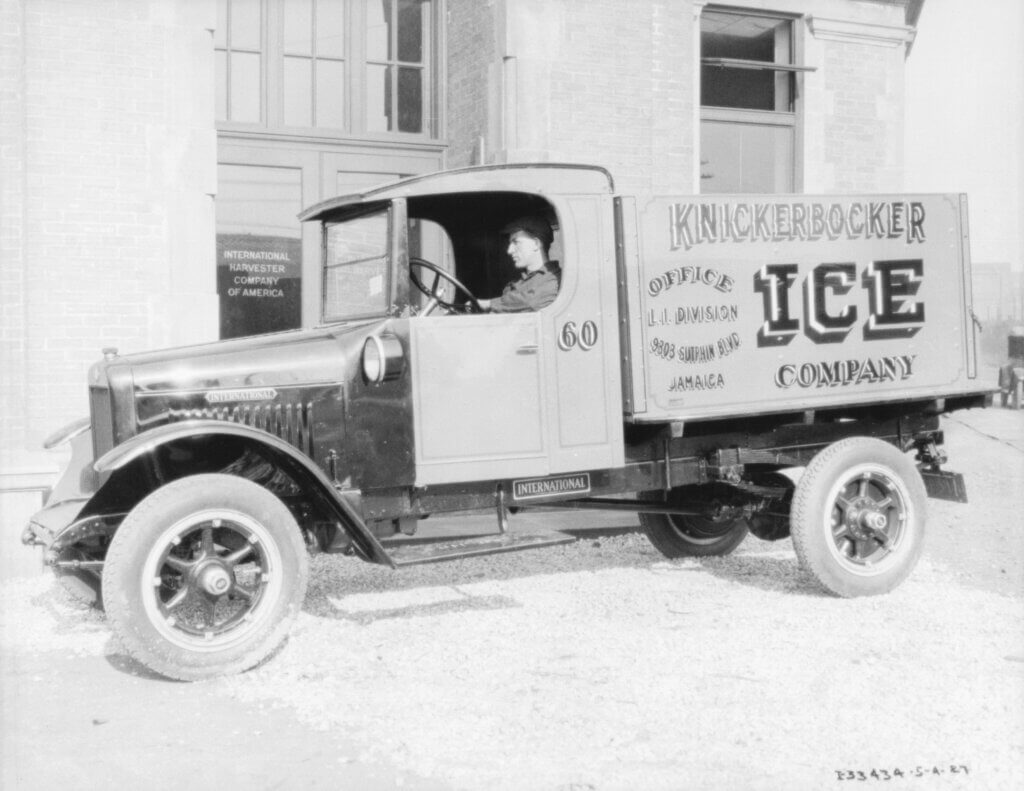
Photo courtesy Wisconsin Historical Society, WHI 130411.
Historic icehouses and companies
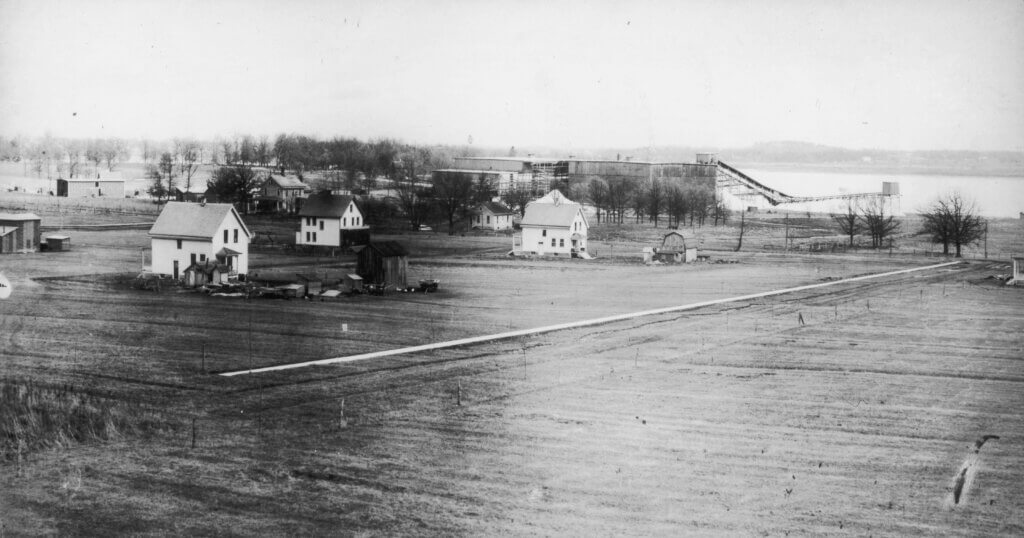
Many of Madison’s parks served as hubs for this booming industry. The ten-acre lot that is now the site of Wingra Park and Wingra Boats was originally occupied by the Knickerbocker Ice Company. Later, the area’s ice harvesting business was dominated by the Conklin & Sons Ice Company. On the property of what is now James Madison Park stood the Conklin & Sons Mendota Icehouse. The facility could store up to 15,000 tons of ice harvested from Lake Mendota. The company operated six smaller icehouses that collectively stored up to 7,000 tons of ice.
Supplying local and regional markets
Most of the harvested ice was used locally with Chicago becoming an important market after the introduction of the Illinois Central Railroad. The Kurt & Huegle Ice Company, located in Maple Bluff on Lakewood Boulevard, benefited from its proximity to the railroad and a nearby slaughterhouse, making it easier to transport ice and meat.
An end to local ice harvesting
Ice harvesting’s gradual demise came in multiple forms, including a decline in lake water quality due to poor wastewater management. The U.S. Sugar Company, headquartered where the Garver Feed Mill currently sits, operated on Lake Monona from 1905 to 1924. It discharged factory waste into the lake via Starkweather Creek. The pollution eventually prompted the Chicago Board of Health to exclude most of our area lakes from the Chicago ice market in 1908, except for Lake Wingra. In 1911, a law further prohibited the use of ice from Lake Monona because of the well-documented sewage and factory waste it received. The industry’s decline further accelerated in the 1910s with the invention of artificial refrigeration. After World War I, large ice-harvesting companies had largely gone out of business.

Even if ice harvesting was still an active industry today, its feasibility would be questionable due to the impacts of climate change and warming winters. The average duration of ice cover has been decreasing across the Yahara chain of lakes since the time of the Industrial Revolution. Historically, the longest ice-cover season on Lake Mendota lasted 161 days (1880-81), while the shortest duration was just 21 days (2001-02).
While the historical significance of ice harvesting remains, the impacts of warming winters and pollution serve as ongoing reminders of how environmental change can affect entire industries and how we relate to our local waters.
Learn more
This article first appeared in the 2026 Teejop Regional Guide (formerly known as the Greater Madison Lake Guide). Read more from the publication.