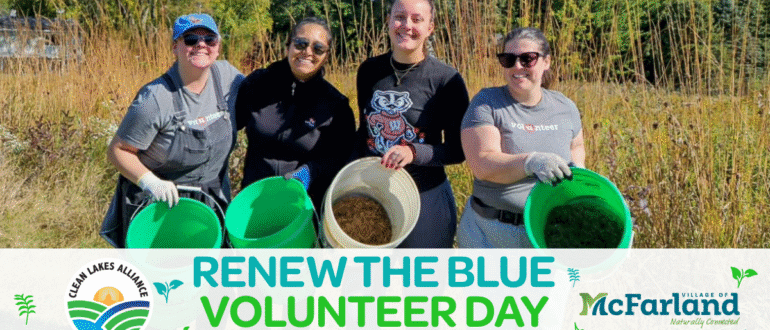
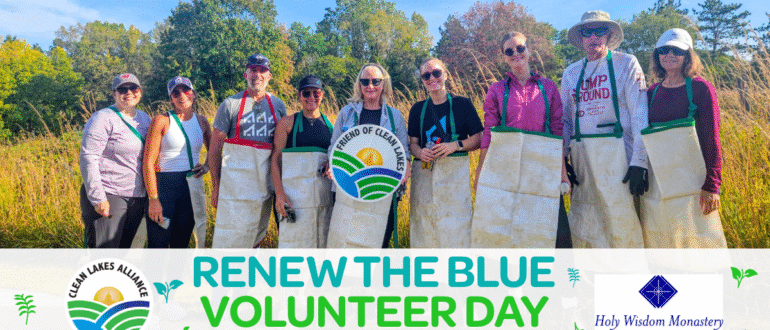
Many hands make light work. And for volunteers collecting and processing native seeds, it can be fun work, too!
On any given fall day, you can likely find volunteers collecting native seeds from a local prairie. For years, many organizations, including Clean Lakes Alliance, have offered this volunteer opportunity and encouraged people to join us in the prairie.
Join us for a native seed collection event with Village of McFarland Public Works to help our lakes! We’ll meet at Marsh Woods Park on Lower Mud Lake on Thursday, October 30th, from 1:00 p.m. to 3:00 p.m. We’ll be collecting native seeds to create and restore native prairie spaces around our lakes. Please wear closed toed shoes and pants as we’ll be in the prairie, off trail. Long layers are highly encouraged to protect yourself from bugs/ticks/scratches. All tools and training will be provided.
How do native plants help the lakes? The more native plantings and prairie spaces we have near our water bodies, the healthier they’ll be. Native plants have profound root systems that prevent erosion and soil loss, stabilize shorelines, slow and filter contaminated runoff before entering the lake, and provide invaluable habitat for our pollinators and wildlife. Seed collections are always a volunteer favorite because you can go at your own pace, do it solo or walk with a small group, and learn a new native plant or two along the way. No experience necessary; all tools are provided!
Join us for a native seed collection event to help our lakes! We’ll be at Holy Wisdom Monastery on Wednesday, October 15, from 4:15 p.m. to 5:45 p.m. Meet at the main entrance to the Holy Wisdom Monastery building (stay right at the fork in the driveway). Please wear closed toed shoes and pants as we’ll be in the prairie, off trail. Long layers are highly encouraged to protect yourself from bugs/ticks/scratches. All tools and training will be provided! All are welcome, including chaperoned children!
How do native plants help the lakes? The more native plantings and prairie spaces we have near our water bodies, the healthier they’ll be. Native plants have profound root systems that prevent erosion and soil loss, stabilize shorelines, slow and filter contaminated runoff before entering the lake, and provide invaluable habitat for our pollinators and wildlife. Seed collections are always a volunteer favorite because you can go at your own pace, do it solo or walk with a small group, and learn a new native plant or two along the way. No experience necessary; all tools are provided!