Many hands make light work. And for volunteers collecting and processing native seeds, it can be fun work, too!
On any given fall day, you can likely find volunteers collecting native seeds from a local prairie. For years, many organizations, including Clean Lakes Alliance, have offered this volunteer opportunity and encouraged people to join us in the prairie.
Small spaces have a big impact on lakes and wildlife in the Yahara Watershed
When rain gardens are added to our local landscape, they help manage stormwater, improve water quality, support biodiversity, and beautify outdoor spaces. You can create a rain garden — a shallow depression filled with native plants that capture runoff — relatively easily at your home or business. They don’t need to be located directly beside a lake to be beneficial to our waters. What happens on the lands surrounding the lakes can have a big impact on the lakes, too!
Join us in-person only for Clean Lakes 101 on Tuesday, July 22nd at The East Side Club from 4:00 – 5:00 p.m. to learn about harmful cyanobacterial blooms in the Yahara lakes.
Register by entering your information in the box below
About this Talk
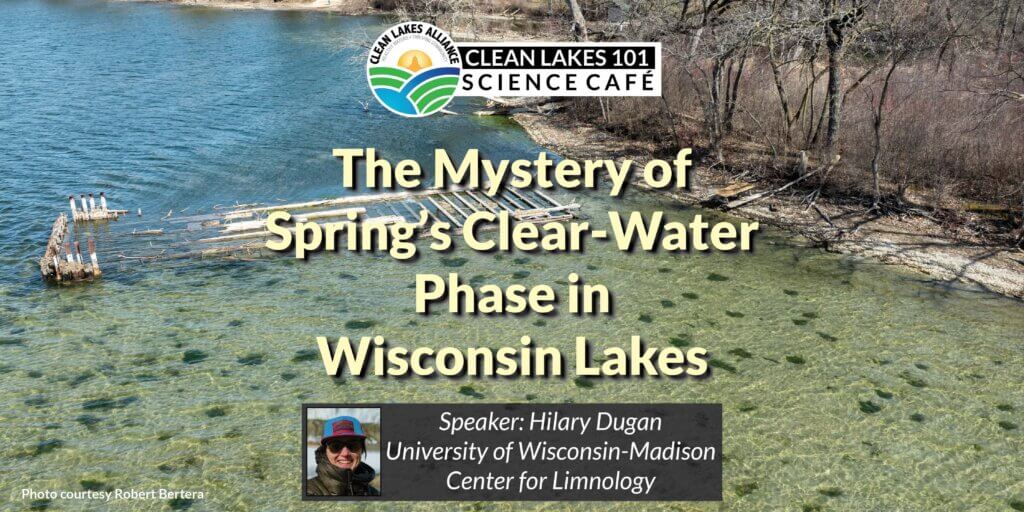
Harmful cyanobacterial (blue-green algae) blooms are an emerging public health concern both worldwide and here in the Yahara lakes. Bloom growth is driven by nutrient pollution and the higher temperatures, longer growing seasons, and intensifying rainfall events that we are experiencing in Wisconsin due to climate change. Some cyanobacteria can make toxins that have health impacts when people and animals ingest, inhale, or have skin contact with the toxins. You can protect your family and pets by learning how to recognize cyanobacteria and identify potentially harmful bloom levels.
About our Speaker
Gina LaLiberte leads response and communication on cyanobacterial bloom issues as the Statewide Harmful Algal Bloom Coordinator for the Wisconsin Department of Natural Resources. A lifelong resident of the Great Lakes region, she has a BS in Biology and an MS in Resource Ecology Management from the University of Michigan and embarked on a career in freshwater algae as a Biology Ph.D. candidate at Bowling Green State University. She has studied algae for more than 30 years.
Event Details
This event will be held at The East Side Club (3735 Monona Dr, Madison, WI 53714). Doors open at 3:30 p.m. The program runs from 4 – 5 p.m. A Q/A session will follow the presentation as time allows. Complimentary event parking will be available at The East Side Club. Parking spots fill up quickly and may be limited depending on capacity.
Thank you for helping make Frozen Assets a week to remember!
Thank you for helping make the 2025 Frozen Assets Festival and 5K Run, Walk, and Skate one of the best ever! Throughout the week, Frozen Assets not only brought the community together, but it also educated people and raised awareness for our number one asset – the lakes!
Cold overnight temperatures help Lake Mendota freeze, briefly
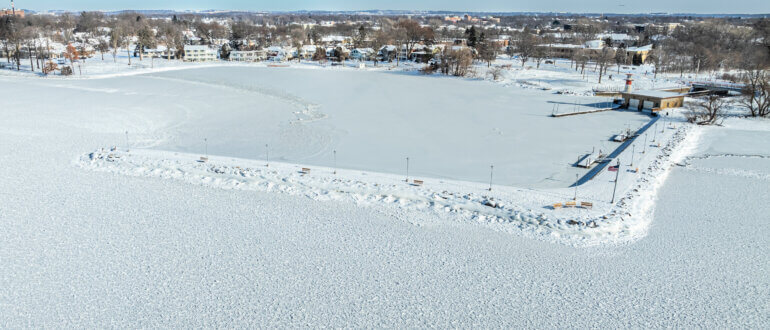
Ice on! Cold nighttime temperatures, combined with cold water and light winds, helped Lake Mendota officially freeze on December 25, 2024, as declared by the Wisconsin State Climatology Office. Two days later, on December 27th, Lake Mendota reopened as high temperatures climbed well into the 40s. The largest lake in the Yahara Watershed froze for the first time in the 2024-2025 winter season just five days after December 20th, which is the median ice-on date for Lake Mendota. The latest date ice-on has been declared is January 30th, and that took place in 1932.
A comprehensive fish survey is an important part of maintaining healthy fisheries in any lake. In the spring of 2023, Clean Lakes Alliance Watershed Engagement Manager Caitlin McAleavey joined a Wisconsin Department of Natural Resources (DNR) fisheries crew on Lake Kegonsa to learn more about what goes into assessing our lakes’ fish populations. The following is her account of the trip.
Ice on! Temperatures below zero, combined with cold water and low wind, helped Lake Mendota officially freeze on January 15, 2024, as declared by the Wisconsin State Climatology Office. Lake Mendota, the largest lake in the Yahara Watershed, froze a full 26 days after December 20th, which is the median ice-on date for the largest lake in the Yahara River Watershed. The January 15th freeze is the 3rd latest freeze date since monitoring began over 170 years ago. The latest ice-on date is January 30th, and that took place in 1932.
Out-of-town anglers drawn to downtown Madison lakes
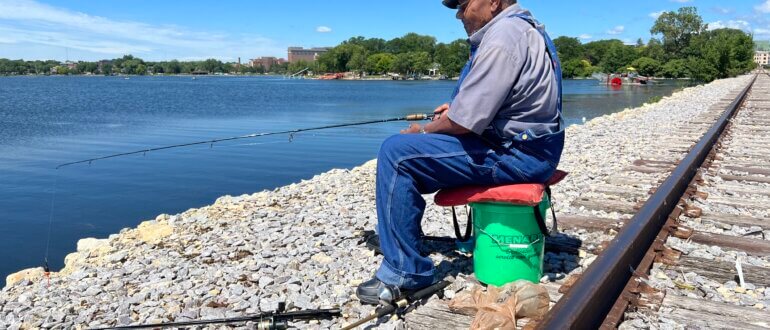
Spend time walking along Lake Monona between Law Park and Brittingham Park, and you’ll notice anglers tossing lines from plenty of places. Unfortunately, there is a lack of accessible shoreline fishing locations. Folks fishing have to contend with hazards like the wall at the Monona Terrace or the railroad tracks…which are actually illegal to use for fishing. Still, the challenges of fishing on Lake Monona do not seem to stop diehard anglers from spending time doing what they love.
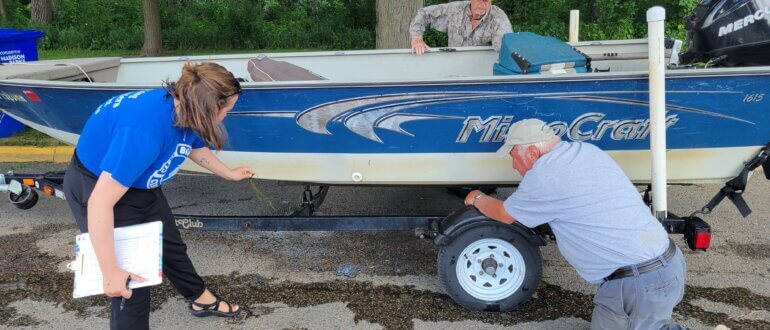
In 2022, Clean Lakes Alliance received a Wisconsin DNR Surface Water Grant to participate in the Clean Boats, Clean Waters (CBCW) program. CBCW is a state-wide aquatic invasive species (AIS) prevention program. The program increases awareness and education to boaters, anglers, and general lake users on best practices to prevent the further spread of AIS at our local boat landings.
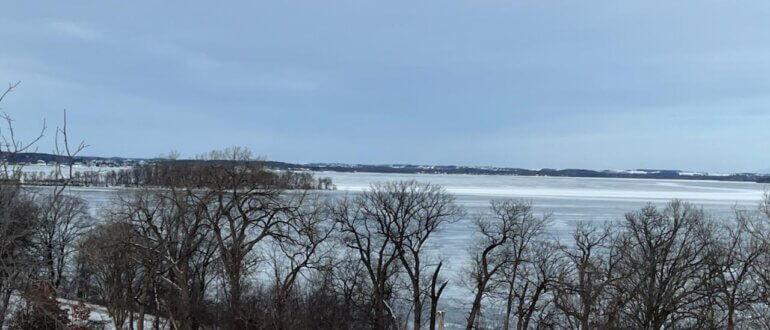
Frigid air temperatures, combined with cold water and low winds, helped Lake Mendota officially freeze on December 25th, 2022. The declaration came from the Wisconsin State Climatology Office. Lake Mendota, the largest lake in the Yahara Watershed, froze five days after December 20th. December 20th is the median ice-on date for the largest lake in the Yahara River Watershed. The Christmas Day freeze date is over a month shy of January 30th – which is the latest date that ice-on has ever been declared (1/30/1932).