News

2025 nearshore training

LakeForecast water quality monitoring in 2025

Clean Lakes Alliance’s LakeForecast water quality monitoring program completed its 13th season in 2025. This program is entirely volunteer implemented, with more than 100 trained monitors assessing water quality conditions from nearshore and offshore locations across all five Yahara lakes (Mendota, Monona, Wingra, Waubesa, and Kegonsa).

From Memorial Day through Labor Day, volunteers recorded water clarity, air and water temperature, waterfowl presence, the extent of floating plant debris, and the severity of green algae and cyanobacteria at public beaches, lakeside parks, and private piers. Submitted condition reports were able to be tracked in real-time on Lakeforecast.org or our free app, allowing the general public to stay up to date on current lake conditions.

Read More

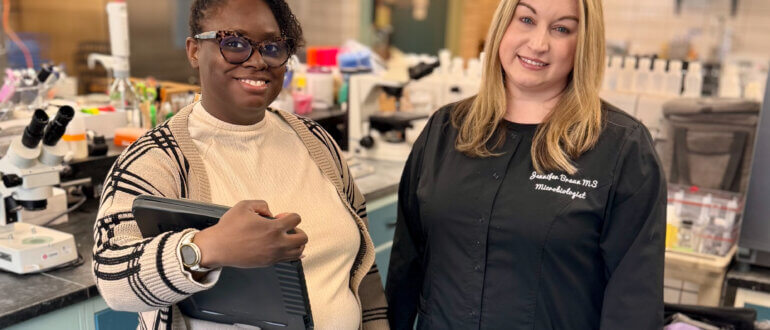
Ronesha Strozier (shown on left) and Jennifer Lavender Braun (shown on right) in the Public Health Madison & Dane County laboratory

An interview with Public Health Madison & Dane County

Parks and lakes define Greater Madison, offering plenty of public beaches to enjoy the water’s edge. In fact, we have 22 public beaches and official swimming locations on the Yahara chain of lakes (and more throughout Dane County). Every summer, Public Health Madison & Dane County (PHMDC) monitors the majority of these beaches from Memorial Day to Labor Day.

Clean Lakes Alliance’s Watershed Programs Manager Caitlin McAleavey sat down with PHMDC’s Jennifer Lavender Braun and Ronesha Strozier to learn how they test the beaches and what determines if they are open or closed.

Read More

2025-7_CL101_header-web

July 22, 2025 @ 4:00 pm 5:00 pm

Clean Lakes 101

Join us in-person only for Clean Lakes 101 on Tuesday, July 22nd at The East Side Club from 4:00 – 5:00 p.m. to learn about harmful cyanobacterial blooms in the Yahara lakes.

2025-7_CL101_header-web

About this Talk

Harmful cyanobacterial (blue-green algae) blooms are an emerging public health concern both worldwide and here in the Yahara lakes. Bloom growth is driven by nutrient pollution and the higher temperatures, longer growing seasons, and intensifying rainfall events that we are experiencing in Wisconsin due to climate change. Some cyanobacteria can make toxins that have health impacts when people and animals ingest, inhale, or have skin contact with the toxins. You can protect your family and pets by learning how to recognize cyanobacteria and identify potentially harmful bloom levels.

About our Speaker

Gina LaLiberte leads response and communication on cyanobacterial bloom issues as the Statewide Harmful Algal Bloom Coordinator for the Wisconsin Department of Natural Resources. A lifelong resident of the Great Lakes region, she has a BS in Biology and an MS in Resource Ecology Management from the University of Michigan and embarked on a career in freshwater algae as a Biology Ph.D. candidate at Bowling Green State University. She has studied algae for more than 30 years.

Event Details

This event will be held at The East Side Club (3735 Monona Dr, Madison, WI 53714). Doors open at 3:30 p.m. The program runs from 4 – 5 p.m. A Q/A session will follow the presentation as time allows. Complimentary event parking will be available at The East Side Club. Parking spots fill up quickly and may be limited depending on capacity.

Clean Lakes 101 Lecture Series

Clean Lakes 101 is a series of educational events open to the public and a great chance to learn more about the science behind the issues that affect our lakes. Each month we feature a different expert to make the science accessible and interesting to non-technical audiences. The series is produced in partnership with the UW-Madison Nelson Institute for Environmental Studies and UW-Extension Lakes, with presenting sponsor National Guardian Life Insurance Company, hosting sponsor The East Side Club, supporting sponsor Johnson Financial Group, and media sponsor WKOW. Additional support is provided by Alliant Energy Foundation, Hovde Properties, and Perkins Coie LLP.

Free

(608) 255-1000

View Organizer Website

3735 Monona Drive
Madison, Wisconsin 53714
+ Google Map
6082551000

Free

(608) 255-1000

View Organizer Website

3735 Monona Drive
Madison, Wisconsin 53714
+ Google Map
6082551000

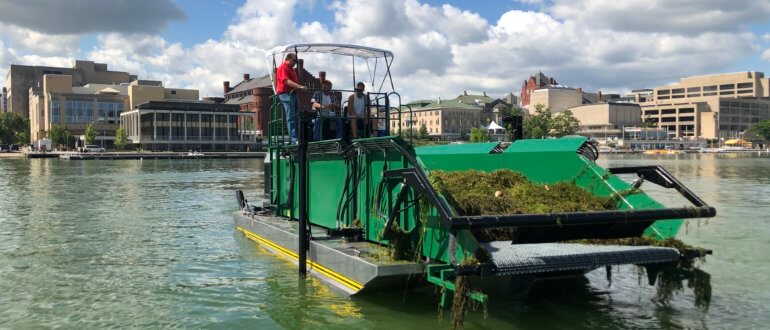
Aquatic plant transport barge on Lake Mendota

By Pete Jopke, Water Resources Planner with the Dane County Land & Water Resources Department
Article first published in the 2022 Greater Madison Lake Guide, a Clean Lakes Alliance publication

Aquatic plant harvesting on the Yahara lakes

The Dane County Land & Water Resources Department manages an aquatic plant harvesting program with much of the harvesting occurring on lakes Mendota, Monona, Waubesa, and Kegonsa. Occasionally, other smaller waterbodies are harvested to aid in recreation and invasive plant management. The program dates to the early 1980’s when five harvesters were in operation. In those years, harvests totaled over 300 tons of plant material. In 2021, the existing fleet of 12 harvesters recorded plant harvests of more than 12,000 tons!

Read More

2022-06_CL101_header-web

June 8, 2022 @ 8:00 am 9:00 am

Clean Lakes 101

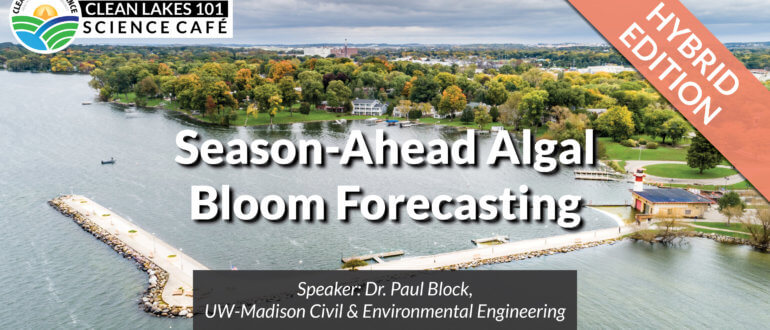
Join us for this in-person or virtual hybrid edition of Clean Lakes 101 to learn about research to predict summertime algal abundance. Register as an in-person attendee or to receive a Zoom link through your confirmation email and watch virtually.

About this Talk

In recent decades, cultural eutrophication of coastal waters and inland lakes around the world has contributed to a rapid expansion of harmful cyanobacteria (blue-green algae). Potential outbreaks of toxin-producing cyanobacteria species have drawn concern from health officials and water managers given their negative ecological, aesthetic, and socioeconomic impacts.

Currently, little information regarding expected summertime cyanobacteria abundance is available prior to the season. With sufficient lead time, communicating the likelihood of elevated cyanobacteria abundance may be informative for proactively managing potential threats to lake and beach safety. We developed a model to issue predictions in early June of expected summertime cyanobacteria abundance for Lake Mendota. The prediction model demonstrates moderate to good skill and an ability to accurately predict summers with above-normal cyanobacteria abundance. Associated beach closure predictions also show promise but are highly sensitive to the short observational record – a limitation directly being addressed by Clean Lakes Alliance volunteer monitors and researchers at UW-Madison.

About our Speaker

Dr. Paul Block is an associate professor in civil and environmental engineering at the University of Wisconsin – Madison. His research focuses on hydroclimatology and water resources systems, with a goal to couple climate, hydrology, and management models and knowledge to reduce risks and promote sustainability of water resources for societal benefit. He is involved in many national and international projects that promote season-ahead forecasts as a means to inform decision-making, with applications to reservoir operations, agricultural planning, water quality assessment, and disaster management. He also has extensive experience as a licensed civil engineer working on groundwater protection and extraction, landfill management, and storm water control projects.

Event Details

This event will be held at The Edgewater hotel – grand ballroom level 5 (1001 Wisconsin Pl, Madison, WI 53703). Doors open at 7:30 a.m. The program runs from 8 – 9 a.m. A Q/A session will follow the presentation as time allows. Complimentary event parking will be available at The Edgewater parking ramp. Parking spots fill up quickly and may be limited depending on hotel capacity.

A Zoom link will be sent to all registrants via the Eventbrite confirmation email.

Clean Lakes 101 Lecture Series

Clean Lakes 101 is a series of educational events open to the public and a great chance to learn more about the science behind the issues that affect our lakes. Each month we feature a different expert to make the science accessible and interesting to non-technical audiences. The series is produced in partnership with the UW-Madison Nelson Institute for Environmental Studies and UW-Extension Lakes, with presenting sponsors First Weber Foundation and Johnson Financial Group, hosting sponsor The Edgewater, supporting sponsor National Guardian Life Insurance Company, and media sponsor WKOW.

Free
3735 Monona Drive
Madison, Wisconsin 53714
+ Google Map
6082551000