
News

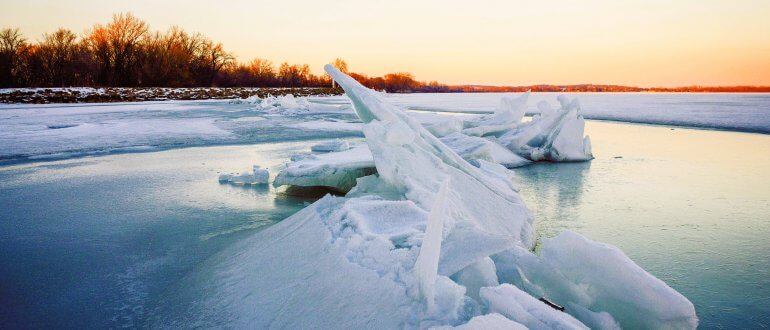
frozen-sunset-on-lake-mendota

Lakes can be surprisingly noisy in winter. Ice fractures and cracks are constantly forming through these cold winter months, causing audible sounds ranging from a slight echoing “blooop” sound to a startling or explosive “bang!” Why exactly are our icy lakes so loud?

Ice isn’t always as solid as it looks

Although lake ice appears stable and solid, it is an ever-shifting material subject to ever-changing forces. Unlike nearly every other substance or material, the volume of water significantly expands as it freezes, increasing the given volume of water about 9% after freezing. The expansion can induce incredible amounts of pressure onto the ice. Think about how frozen water can cause metal pipes to bend and burst.

Read More

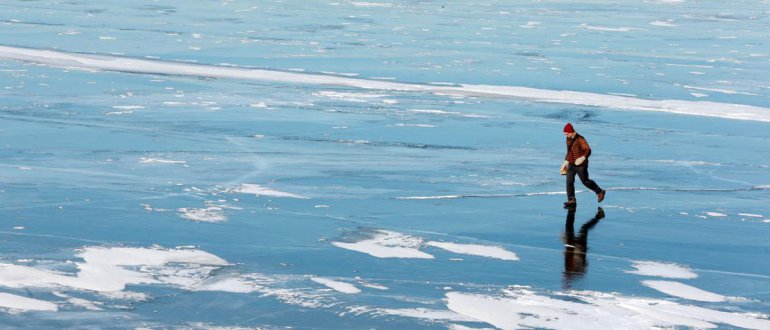
Person walks across frozen Lake Mendota

The brisk air is a reminder that our local lakes will soon freeze, but predicting when is anyone’s guess. There is a complex interplay of many forces that uniquely influences each lake’s ice-on date. (Learn more about the Mendota Freeze Contest and make your guess for when Lake Mendota will freeze.)

Freezing air temperatures are obviously the driving force behind lake ice formation. Yet water has a high specific heat capacity. This means it takes a lot of energy to change the temperature of water compared to other materials. Therefore, air temperatures from much earlier in the season can impact timing of ice formation. A cool September, for instance, can set the stage for an earlier freeze.

Read More