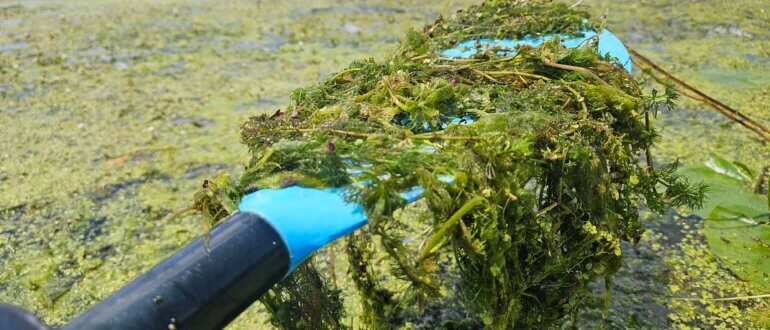
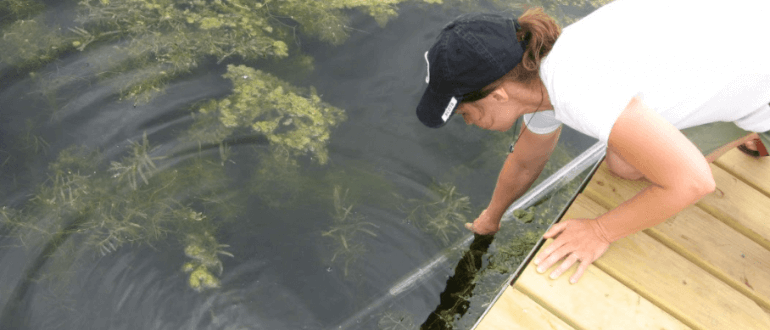
Submerged aquatic plants, often dismissed as “weeds,” are essential to the freshwater ecosystems of lakes and rivers. Known scientifically as macrophytes, aquatic plants absorb nutrients like phosphorus and nitrogen which otherwise can fuel algal blooms. They also stabilize lake-bottom sediments, help protect shorelines from wave erosion, and provide critical habitat and food for fish and other wildlife. Because aquatic plants play such a vital role, the Wisconsin Department of Natural Resources (DNR) regulates and limits their removal to preserve the numerous benefits they bring to our waterways.
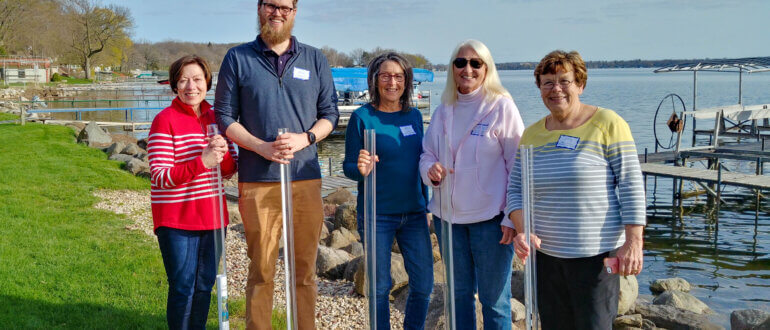
Clean Lakes Alliance’s LakeForecast water quality monitoring program completed its 13th season in 2025. This program is entirely volunteer implemented, with more than 100 trained monitors assessing water quality conditions from nearshore and offshore locations across all five Yahara lakes (Mendota, Monona, Wingra, Waubesa, and Kegonsa).
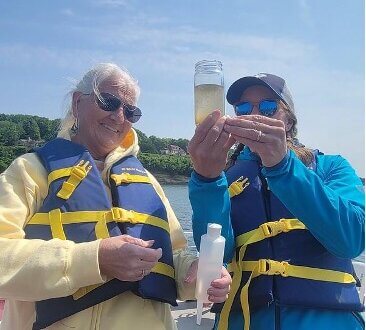
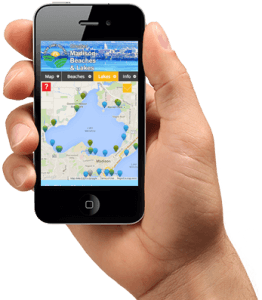
From Memorial Day through Labor Day, volunteers recorded water clarity, air and water temperature, waterfowl presence, the extent of floating plant debris, and the severity of green algae and cyanobacteria at public beaches, lakeside parks, and private piers. Submitted condition reports were able to be tracked in real-time on Lakeforecast.org or our free app, allowing the general public to stay up to date on current lake conditions.
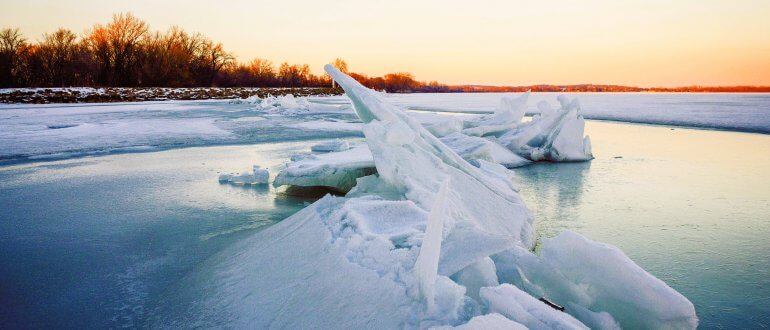
Lakes can be surprisingly noisy in winter. Ice fractures and cracks are constantly forming through these cold winter months, causing audible sounds ranging from a slight echoing “blooop” sound to a startling or explosive “bang!” Why exactly are our icy lakes so loud?
Ice isn’t always as solid as it looks
Although lake ice appears stable and solid, it is an ever-shifting material subject to ever-changing forces. Unlike nearly every other substance or material, the volume of water significantly expands as it freezes, increasing the given volume of water about 9% after freezing. The expansion can induce incredible amounts of pressure onto the ice. Think about how frozen water can cause metal pipes to bend and burst.
Join us in-person only for Clean Lakes 101 on Tuesday, July 22nd at The East Side Club from 4:00 – 5:00 p.m. to learn about harmful cyanobacterial blooms in the Yahara lakes.
Register by entering your information in the box below
About this Talk
Harmful cyanobacterial (blue-green algae) blooms are an emerging public health concern both worldwide and here in the Yahara lakes. Bloom growth is driven by nutrient pollution and the higher temperatures, longer growing seasons, and intensifying rainfall events that we are experiencing in Wisconsin due to climate change. Some cyanobacteria can make toxins that have health impacts when people and animals ingest, inhale, or have skin contact with the toxins. You can protect your family and pets by learning how to recognize cyanobacteria and identify potentially harmful bloom levels.
About our Speaker
Gina LaLiberte leads response and communication on cyanobacterial bloom issues as the Statewide Harmful Algal Bloom Coordinator for the Wisconsin Department of Natural Resources. A lifelong resident of the Great Lakes region, she has a BS in Biology and an MS in Resource Ecology Management from the University of Michigan and embarked on a career in freshwater algae as a Biology Ph.D. candidate at Bowling Green State University. She has studied algae for more than 30 years.
Event Details
This event will be held at The East Side Club (3735 Monona Dr, Madison, WI 53714). Doors open at 3:30 p.m. The program runs from 4 – 5 p.m. A Q/A session will follow the presentation as time allows. Complimentary event parking will be available at The East Side Club. Parking spots fill up quickly and may be limited depending on capacity.
A comprehensive fish survey is an important part of maintaining healthy fisheries in any lake. In the spring of 2023, Clean Lakes Alliance Watershed Engagement Manager Caitlin McAleavey joined a Wisconsin Department of Natural Resources (DNR) fisheries crew on Lake Kegonsa to learn more about what goes into assessing our lakes’ fish populations. The following is her account of the trip.
Clean Lakes Alliance’s LakeForecast water quality monitoring program completed its 11th season in 2023. This program is entirely volunteer implemented, with 90 trained monitors assessing water quality conditions from nearshore and offshore locations across all five Yahara lakes (Mendota, Monona, Wingra, Waubesa, and Kegonsa). From Memorial Day through Labor Day, volunteers recorded water clarity, air and water temperature, waterfowl presence, extent of floating plant debris, and the severity of green algae and cyanobacteria at public beaches, lakeside parks, and private piers. Submitted data can be seen in real-time on lakeforecast.org or our free app allowing the general public to stay up to date on current lake conditions.
Join us for this in-person or virtual hybrid edition of Clean Lakes 101 to hear about Dane County’s many projects to keep our lakes clean and mitigate the impacts of climate change. Register as an in-person attendee or to receive a Zoom link through your confirmation email and watch virtually.
Register by entering your information in the box below
About this Talk
Hear from Dane County Executive Joe Parisi and Laura Hicklin, Director of Dane County’s Land & Water Resources Department as they describe the County’s many projects to keep our lakes clean and mitigate the impacts of climate change. From more extreme weather with increased rain in the spring, to dryer, hotter summers and winters, the risks of climate change become clearer all time. These changes are exacerbating existing threats to the Yahara lakes, such as increased phosphorus runoff.
During this presentation, you’ll learn the latest information about specific projects that advance Renew the Blue such as Suck the Muck, manure treatment, and conservation cover programs, along with updates on aquatic plant management, lake levels, Yahara River sediment removal, and the ongoing efforts to combat climate change.
About our Speakers
Dane County Executive: Joe Parisi has called Dane County home his entire life. He sought out public service as a way to give back to a community that has given so much to him. Joe was first elected as County Executive, the chief elected leader of Dane County, in 2011 after 6 years in the State Assembly and 8 years as Dane County Clerk. Joe’s priority is to ensure that everyone in our community has access to the opportunity to succeed. He believes investing in people pays big dividends. Joe knows this can work because he experienced it. Now Joe believes it is his turn to give back to ensure that our children’s generation has access to the same opportunities that were available to him. Joe and his wife, Erin Thornley Parisi, raised their two daughters on Madison’s east side. With a population of more than 500,000 and an annual county budget of $600 million, Dane is Wisconsin’s second largest county. Dane County has the highest private sector job and population growth in Wisconsin.
Laura Hicklin: Laura Hicklin is the Director of the Dane County Land & Water Resources Department. The Land & Water Resources Department protects and enhances the natural, cultural, and historic resources of Dane County; provides the County’s residents with a broad array of accessible, high quality resource-based recreational services and facilities; and supports residents, communities, local governments, and other agencies and organizations in their resource management and protection activities. Laura’s goal is to bring civility to challenging discussions about natural resource management in Dane County.
Event Details
This event will be held at The Edgewater hotel – grand ballroom level 5 (1001 Wisconsin Pl, Madison, WI 53703). Doors open at 7:30 a.m. The program runs from 8 – 9 a.m. A Q/A session will follow the presentation as time allows. Complimentary event parking will be available at The Edgewater parking ramp. Parking spots fill up quickly and may be limited depending on hotel capacity.
A Zoom link will be sent to all registrants in a confirmation email.
In 2022, our volunteers embarked on the 10th season of LakeForecast water quality monitoring. This work involved collecting nearshore condition reports at piers, beaches, parks, and access points around the five Yahara lakes. From May through September, volunteers measured water clarity, recorded air and water temperature, identified the presence of green algae and cyanobacteria, and noted additional visual observations. Reports are entered into the LakeForecast app where all data are updated in real time.
In 2019 water quality monitoring took place at piers and beaches around the five Yahara lakes. Volunteers measured near-shore water clarity, air and water temperature, and noted several visual observations during the monitoring season, which runs from May to September.
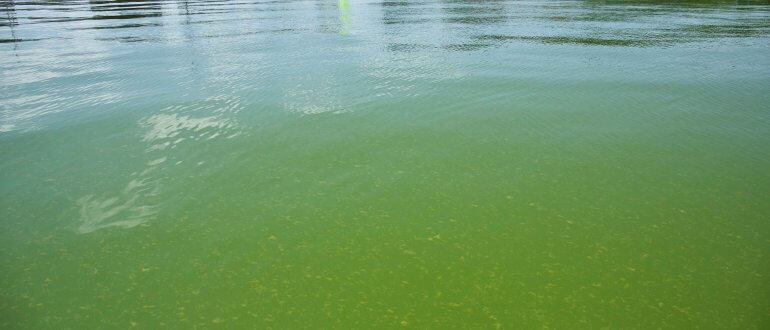
All five Yahara lakes saw cyanobacteria (blue-green algae) blooms throughout the summer of 2019. One bloom in particular on Lake Mendota was quite large, covering at least an area from Picnic Point to the Memorial Union on August 1st. The bloom was well-documented by photos from community members as having a green pea soup-like consistency.
Cyanobacteria blooms are often bright green, but can also appear in shades of brown, blue, and white. Typically, blooms are spotted on warm days with calm winds. On August 1st, Madison reported a high of 81 degrees with an average wind speed of two miles per hour.